

Architecture · 8 min read
Building With Earth
Estate Architecture Team · 28 February 2026
Why we compacted the walls of the Earth Villa from soil dug out of its own foundations — and what that decision cost.
When we excavated the foundations for what became the Earth Villa, we were left with a substantial pile of subsoil and the usual question of where to send it. The answer, it turned out, was upwards.
How rammed earth works
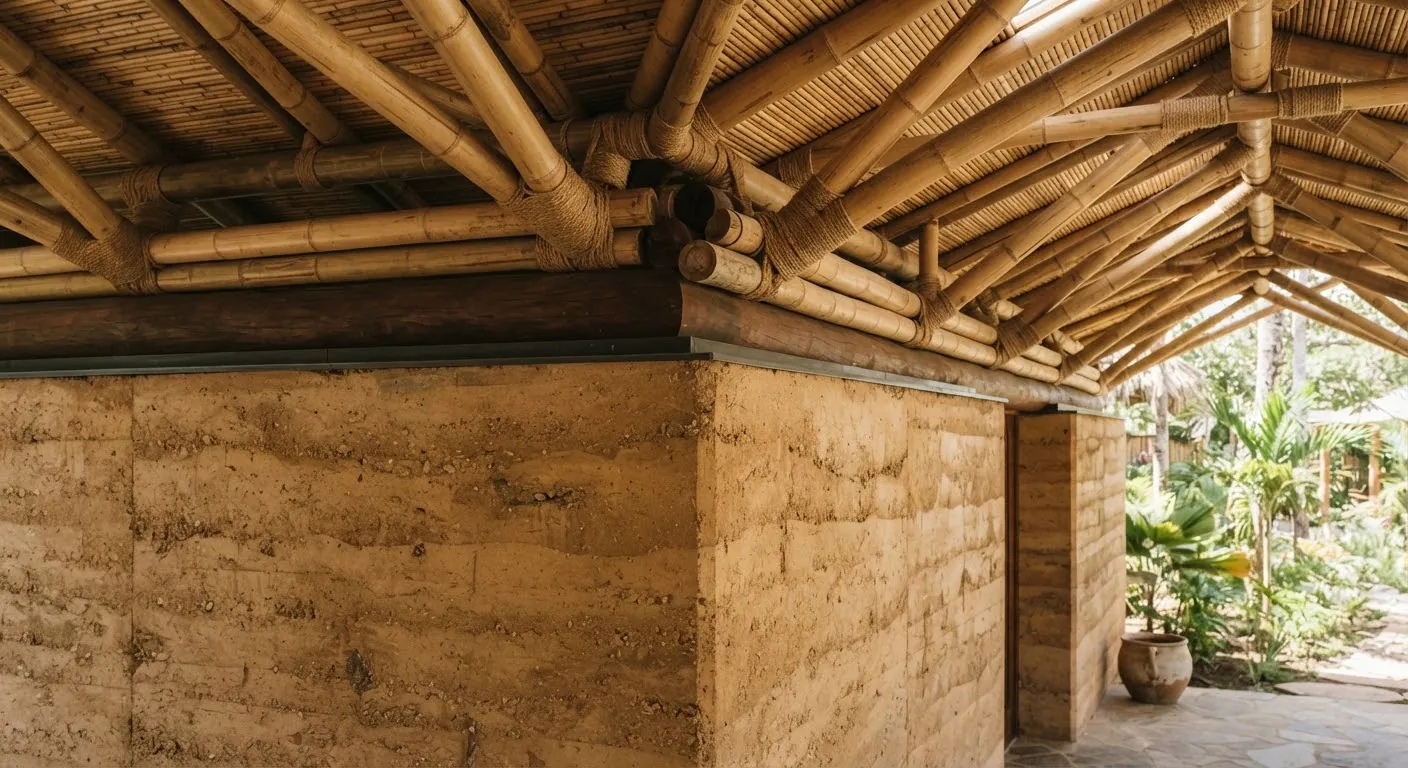
Damp subsoil is compacted in thin layers inside temporary formwork until it reaches something close to the density of soft stone. Each layer stays visible in the finished wall as a fine horizontal striation, so the wall reads as a record of its own construction.
The finished walls are around 500mm thick. That mass is the point: it absorbs heat through the day and releases it overnight, holding the interior within a few degrees year-round without any mechanical assistance.
The cheapest energy is the energy a building never needs in the first place.
What it cost
It would be dishonest to present this as straightforwardly cheaper. Rammed earth is labour-intensive, weather-dependent, and unforgiving of mistakes — a badly compacted layer cannot be patched, only removed. Construction took considerably longer than a conventional build of the same footprint.
What it saved was material transport, ongoing energy, and eventual demolition waste: the walls can be broken up and returned to the ground they came from. Over the building's life the arithmetic works. Over the build programme, it did not feel like it.

We would do it again, and we are — the next two buildings on the estate are already designed around the same method.
Keep Reading
More from the estate

Reading the Soil
Our head grower on why the health of a farm is decided underground, and what a handful of earth will tell you if you know how to ask.
Read more
A Menu Without a Plan
Our kitchen does not decide what to cook until the morning harvest is in. Here is how that actually works in practice.
Read more
The Valley at First Light
Our resident ecologist on the order in which the reserve wakes up, and why the first hour is worth losing sleep over.
Read more